Worship and ritual
Worn for pujas, vratas, rites of passage and temple visits, often in a prescribed colour.
Many Hindu and other pujas, vratas, rites of passage and temple visits are done in a clean, often new saree, and in some traditions in a particular colour or cloth. The rules differ by region, family and community, and what follows is a general picture.
When it is worn
A saree is worn for pujas at home and in the temple, for vratas such as Karwa Chauth and Varalakshmi, for the naming ceremony, the sacred thread rite and the housewarming, and for rites of passage such as the seemantham and the baby shower. In many homes a woman bathes first and then puts on a clean saree, often silk or cotton, that is kept for worship. A saree worn outside, to a market or a funeral, may not be worn to the altar in some families. Customs vary, and each family has its own way.
Colours and cloth
Red, yellow, saffron and green are considered auspicious in many Hindu traditions, and many women choose them for worship. Yellow or turmeric is common for Thursday pujas and for Sai and Vishnu worship, red for Devi, and white or pale colours for some Vaishnava and Shaiva rites. In several communities silk is regarded as pure and is worn for the main rite, and some cotton cloths, such as the unstitched white or cream saree with a coloured border, are used for ritual purposes. These associations are not universal, and women choose based on family practice.
Regional customs
In Tamil Nadu, women often wear a silk saree, such as the nine yard madisar among some Brahmin families, for the main rites. In Kerala, the cream and gold kasavu is worn to the temple, and many temples ask for the set mundu or a similar plain dress. In Maharashtra, the Nauvari is worn at Gauri pujan and other festivals, and in Bengal, a red-bordered white saree is worn for many pujas. In Gujarat and Rajasthan, women may wear bandhani or a plain cloth with an odhni for the puja.
Customs and etiquette
For temple visits, wear a clean, modest saree with the shoulders covered, and remove shoes before entering. Some temples have dress codes that ask women to wear a saree or another traditional dress, and a few ask for a particular colour or cloth. Visitors should ask rather than assume, as practices differ even within a state. Many families set aside a saree for worship and wash it separately. It is also common for the saree to be new on the day of an important vrata, and a gift of a saree to a married woman is part of several rites.
Worth knowing
- Madisar: The nine yard saree worn by some Tamil Brahmin women for rites.
- Set mundu: The two-piece cream and gold cloth worn in Kerala.
- Varalakshmi vratam: A festival of worship in the south, observed in a silk saree by many women.
- Karwa Chauth: A north Indian vrata for which women dress in red.
- Gauri pujan: A Marathi rite for which women wear the Nauvari or a silk saree.
Good to know
- Keep a clean saree for worship and wash it separately.
- Fold silk in muslin and air it before and after a puja.
- Avoid oil and incense stains by keeping the saree away from the lamp and ash.
Sources and further reading
Original text by the EveryPallu desk, written with AI assistance and checked against the sources above. If we have something wrong, tell us.
Worship and ritual on EveryPallu
The sarees written up so far, newest and best known first.
 🇮🇳 India and 1 moreSariसाड़ी
An unstitched cloth draped over the body, worn across the Indian subcontinentCotton · Brocade · Ikat
 🇮🇳 IndiaBomkai sari
A handloom Odisha saree with fish and temple threadwork on border and palluCotton · Brocade
 🇮🇩 Indonesia and 5 moreSarongsarung
A tubular waist-wrap of batik or checks, worn across Asia, Africa and the Pacific.Cotton · Batik · Ikat
 🇮🇳 IndiaAssam silk
Assam's three silks: golden muga, white pat and warm eri, woven in SualkuchiMuga
🇮🇳 IndiaKhandua
An Odia ikat sari, usually red or orange, worn at weddings and offered to JagannathSilk · Ikat
 🇮🇳 IndiaKoorai silk sariகூரை பட்டு புடவை
A nine-yard silk and cotton bridal sari from Koranad, checked, for Tamil Hindu weddingsSilk · Checks and stripes
 🇮🇳 IndiaUttariya
Ancient Indian upper garment of loose cloth draped over shoulders and armsCotton
🇮🇳 IndiaKasavu
A Kerala handloom cloth with fine gold or silver border lines on white cottonCotton · Zari work
 🇮🇩 Indonesia and 5 moreBatikꦧꦛꦶꦏ꧀
A wax-resist dyeing technique from Java, used for patterned cloth.Silk · Batik · Hand painting
 🇮🇳 IndiaGamosaগামুছা
A white cotton cloth with a red border from Assam, woven for Bihu, prayer and daily useCotton
 🇮🇩 IndonesiaBalinese textiles
The woven cloths of Bali, from sacred double ikat to gold-dusted ceremony wearCotton · Ikat · Brocade
 🇮🇳 IndiaGarad sariগরদ শাড়ি
A fine silk handloom sari from Murshidabad and Birbhum in West BengalSilk · Zari work · Brocade
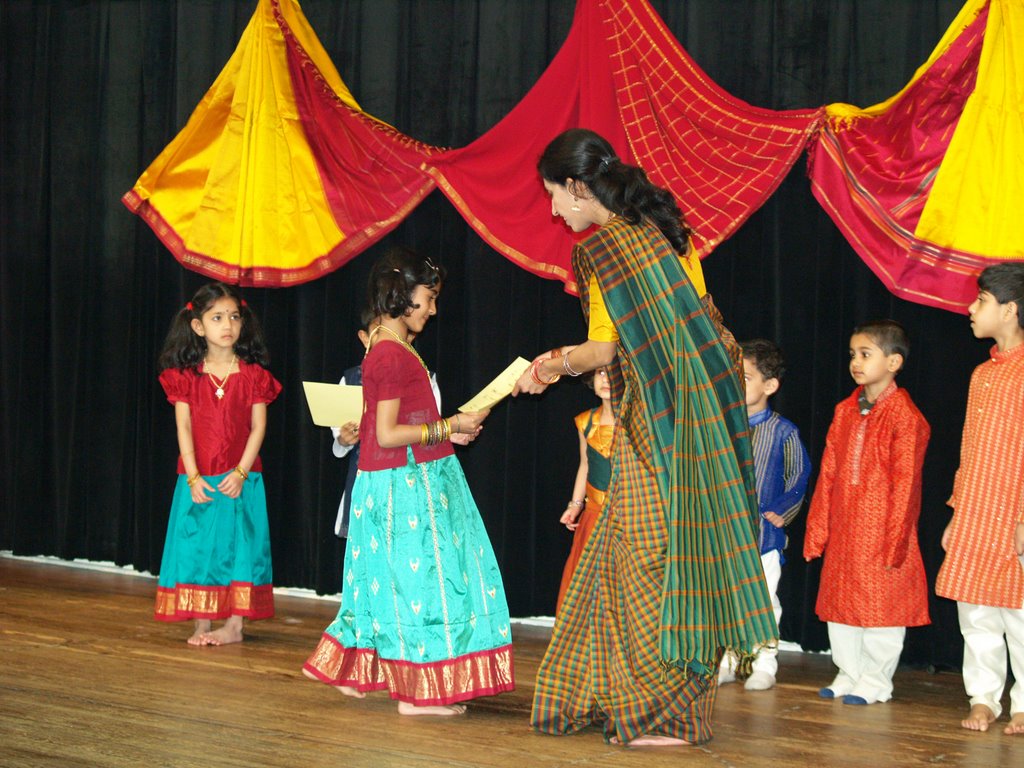 🇮🇳 IndiaLanga voniలంగా వోణి
A South Indian half sari: a string-tied skirt and a short diagonal upper clothSilk · Embroidery · Mirror work
 🇮🇳 India and 1 moreBandhani
A tie-dye cloth of tiny knotted dots, made in Gujarat and Rajasthan for saris and turbansSilk · Tie-dye
 🇮🇳 India and 3 moreDupattaदुपट्टा / دوپٹہ
A long scarf-like wrap worn across South Asia with skirts or tunicsSilk · Tie-dye · Zari work
🇮🇳 IndiaMadisarமடிசார்
A nine-yard Tamil Brahmin sari drape, worn over one shoulder for ceremoniesSilk
 🇮🇩 IndonesiaGeringsingᬕ᭄ᬭᬶᬂᬲᬶᬂ
A sacred double ikat cloth woven only in Tenganan, a Bali Aga village in BaliCotton · Ikat
 🇮🇳 IndiaOdisha Ikat
A tie-dyed Odisha silk weave known for curvilinear motifs and brocade bordersSilk · Ikat · Brocade
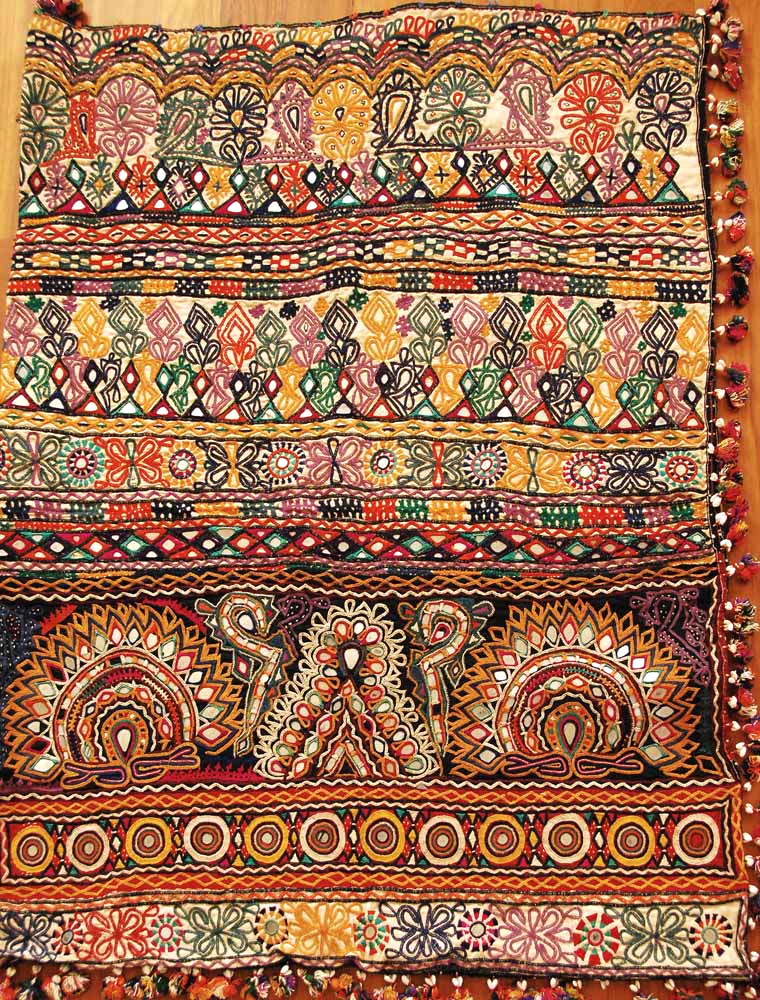 🇮🇳 IndiaKutch embroidery
Mirror-set hand embroidery from Kutch district, Gujarat, worked mainly by womenCotton · Embroidery · Mirror work
🇮🇳 IndiaShaphee Lanphee
A black Manipuri shawl with red borders, embroidered by hand with animals, sun and starsCotton · Embroidery
 🇮🇳 IndiaKasta sariनऊवारी साड़ी
A nine-yard Maharashtra sari tucked at the back and worn like a dhotiCotton
🇮🇳 IndiaBerhampur Patta
A silk saree from Brahmapur, Odisha, with a zari border in a temple (phoda) designSilk · Zari work · Temple border
 🇮🇳 India and 1 moreHandloom sari
Saris woven by hand on village looms in India and BangladeshSilk · Brocade · Zari work
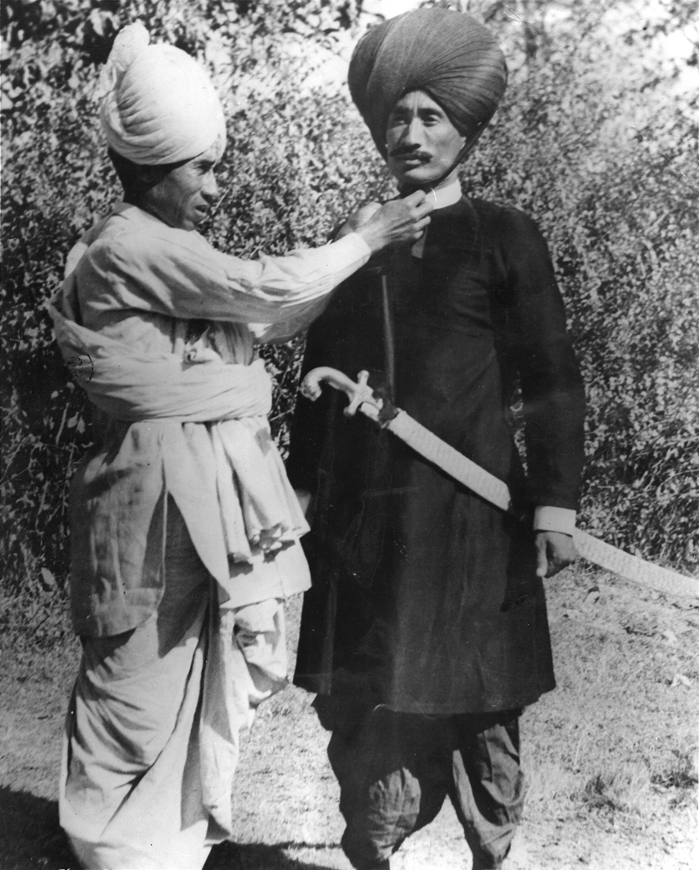 🇮🇳 IndiaPheichom
A men's wrap of the Meitei people of Manipur, worn like the dhoti, in cotton or silkCotton · Block print
 🇮🇳 India and 1 moreDhoti
An unstitched cloth tied at the waist and worn to the ankle, the men's answer to the sariCotton
 🇮🇩 Indonesia and 3 moreSongketᬲᭀᬂᬓᬾᬢ᭄
A hand-woven brocade cloth of Southeast Asia, patterned with gold or silver threadSilk · Brocade · Zari work
🇮🇳 IndiaGadwal sari
A handwoven sari from Telangana with a cotton body, silk border and zari palluCotton · Zari work
 🇬🇷 GreeceChlamysχλαμύς
An ancient Greek and Byzantine draped cloak made from a single rectangular clothWool · Embroidery
 🇮🇩 IndonesiaUlosᯥᯞᯘᯬ᯲
A handwoven Batak cloth from North Sumatra, draped at weddings to bind bride and groom.Cotton
 🇰🇭 Cambodia and 3 moreSbaiស្បៃ
A shawl-like breast cloth derived from the sari, worn over one shoulder in Southeast AsiaSilk · Embroidery · Brocade
🇮🇳 IndiaTarpaya
An ancient Indian fine silk or linen cloth worn as a ritual lower garmentSilk
🇧🇹 BhutanDumdyam
An ankle-length Lepcha wrap of one smooth cloth, solid in colour, held by a waistbandCotton
Photo credits on this page
The small pictures above come from Wikimedia Commons under free licences. Some are cropped to fit.
- Geringsing: Unknown author, Public domain, source
- Rajshahi silk: Bongan, CC BY-SA 3.0, source
- Pat silk: Hiranmoy Boruah, CC BY-SA 3.0, source
- Bomkai sari: Nayansatya, CC BY 3.0, source
- Sarong: Unknown author, CC BY-SA 3.0, source
- Koorai silk sari: En.saravanan, CC BY 4.0, source
- Sbai: Stephowz, CC BY-SA 4.0, source
- Uttariya: Biswarup Ganguly, CC BY 3.0, source
- Khara Dupatta: Kinshuk Sunil, CC BY 2.0, source
- Batik: Fpangestuphotographer, CC BY-SA 4.0, source
- Gamosa: Priyankoo at en.wikipedia, Public domain, source
- Balinese textiles: Chris Hazzard, CC BY-SA 3.0, source
- Odisha Ikat: Atudu, CC BY-SA 4.0, source
- Chlamys: Unknown author, Public domain, source
- Kutch embroidery: Jainamishra, CC BY 3.0, source
- Kasta sari: Dakutaa at en.wikipedia, CC BY-SA 3.0, source
- Handloom sari: P.K.Niyogi, Public domain, source
- Ulos: Boy Lawson, CC BY-SA 3.0, source
- Pheichom: Unknown author, Public domain, source
- Dhoti: Redaloes at English Wikipedia, Public domain, source
- Songket: Rijksmuseum, CC0, source
- Langa voni: Kannadiga, CC BY-SA 3.0, source
- Bandhani: RubyGoes, CC BY 2.0, source
- Sari: Suyash.dwivedi, CC BY-SA 4.0, source