
Sarong
In its own language: sarung
A tubular waist-wrap of batik or checks, worn across Asia, Africa and the Pacific.
A sarong is a wide length of fabric sewn into a tube, wrapped around the waist and secured by folding the top hem down. It is worn by men and women across Southeast Asia, South Asia, the Arabian Peninsula, the Horn of Africa and the Pacific, often woven in checks or dyed with batik and ikat by local craftsmen.
- A Malay loanword meaning 'to cover', first recorded in English in 1834.
- Worn as everyday dress across Southeast Asia, South Asia, Africa and the Pacific.
- The kepala is a central contrasting panel worn at the small of the back.
- Indonesian men often wear checked sarongs for prayer, women batik for formal events.
- Somali macawiis are usually colourful; black ones are rare.
What is Sarong?
A sarong is a wide rectangle of cloth sewn into a tube, or simply a long piece of fabric, that people wrap around the waist and tuck to stay in place. It is everyday wear for millions of men and women across Southeast Asia, South Asia, the Arabian Peninsula, the Horn of Africa and the Pacific islands. The cloth can be cotton, silk or synthetic yarn. Men often wear versions with woven checks, while women frequently choose cloth dyed in batik or ikat patterns. In Indonesia it is called kain sarung, in Malaysia simply kain, and across the Indian subcontinent people know similar wraps as lungi, mundu or phanek. It is usually worn with a blouse or shirt, and sometimes with a kebaya.
Where does Sarong come from?
The English word sarong comes from Malay. It means to cover or sheath. The term entered English in 1834, though the wrapped garment itself is far older. On the Arabian Peninsula, an open unstitched version called izaar has been worn since pre-Islamic times. In Yemen, tribal groups still weave their own ṣārūn with distinct patterns. Across the Indian Ocean, Arab fishermen traditionally wore tube-stitched wraps imported from Bangladesh long before European traders arrived. In Indonesia and Malaysia, the wrap is so central that the government has promoted public sarong days to honor its craftsmen. In Sri Lanka, the sarong was once standard dress for men, and leaders now wear it on special occasions to signal humility and national pride.
How is Sarong made?
A standard sarong begins as a length of cloth roughly a yard across and well over two yards long. Weavers or dyers often create a panel of contrasting pattern, called the kepala, the word for head, across the centre of the width. The cloth is then sewn lengthwise into a cylinder. In Indonesia, men commonly wear checked cloth for prayer, while women wear batik sarongs with flower motifs in bright colours. Balinese sarongs are left unstitched and simply wrapped. In Somalia, the macawiis arrives already sewn into a long circular cloth, sometimes in polyester or nylon blends, but older ones were cotton. Traditional methods include resist-dyed ikat and hand-woven tenun.
Sarong, drawn
Colours, motifs and borders
The simplest sarongs are woven in checks or stripes. Others carry flowers, animals or geometric shapes created through batik or ikat dyeing. In Yemen, tribal cloth sometimes carries tassels and fringes, while Indonesian double-plaid designs are favoured in Saudi Arabia. The kepala is a one-foot band of different colour or design set at the centre back when the tube is worn. Women’s sarongs tend to be more colourful; black is rare in Somali macawiis. Modern sarongs also carry printed designs on thin rayon, especially in the West, but these differ in size and feel from traditional Asian and African cloth.
How Sarong is worn
To wear a tubular sarong, one steps inside, pulls the top edge above the navel and lets the hem fall to the ankles. The kepala sits at the small of the back. The wearer gathers extra cloth from each side toward the front, overlaps the ends, then folds the upper edge down over itself to lock the wrap in place. In public, Malay men most often wear it to Friday prayers, but at home it is relaxed clothing for all communities. Women often pair it with a kebaya blouse for formal events. In Sri Lanka, upper-class men usually keep it for the house or for ceremony.


When Sarong is worn
The sarong moves easily from house to mosque, field to wedding. In Java, batik sarongs appear at formal weddings for both men and women. Malay men wear checked cloth to the mosque on Fridays, while women wear batik versions with a kebaya to formal gatherings. In Sri Lanka, politicians wear a so-called national sarong on special days to show solidarity with ordinary people. The Maranao people of the Philippines use the malong in their kapa malong malong folk dance. Western beach wraps borrow the name but are lighter cover-ups, not the traditional garment.
Styles of Sarong
Every region gives the wrap its own name and finish. Indonesians call it kain sarung; in Bali it is kamben. Malaysians distinguish the kain pelikat with stripes, the kain batik for women, and the kain samping worn with Baju Melayu. In India, Assamese mekhela, Manipuri phanek and Keralan mundu follow the same form. Arabs know it as izaar, fūṭah or wizār. The Somali macawiis is usually vivid and machine-made, whereas handwoven tribal cloth still survives in Yemen and southwestern Saudi Arabia. Powerloom copies exist, but village weavers and batik craftsmen still supply much of the cloth.
What Sarong means
The sarong carries different meanings in different places. In Indonesia, President Joko Widodo has called it a significant element of culture and urged citizens to wear it monthly in appreciation of craftsmen. In Sri Lanka, it carries a complex stigma: once everyday wear, it is sometimes seen as clothing for the less educated, yet a new generation embraces it as a badge of national pride. In Malaysia, Keretapi Sarong events on Malaysia Day celebrate the cloth in public spaces. For many coastal and island communities, it remains a mark of identity older than colonial borders.
Questions people ask about Sarong
Where does the sarong come from?
The word is Malay, and the wrapped tube garment is traditional across Indonesia, Malaysia, South Asia, the Arabian Peninsula, the Horn of Africa and the Pacific islands.
How is a sarong made?
A length of cloth roughly a yard across and well over two yards long is stitched into a tube; patterns are woven, batik-dyed or printed, often with a contrasting kepala panel.
What is the kepala?
It is a one-foot band of different colour or design woven or dyed across the centre width of the cloth, positioned at the back when worn.
Is a sarong worn only by women?
No, it is unisex. Men wear checked or plain versions, often for prayer or at home, while women wear batik sarongs with a kebaya to formal events.
How is it secured?
After stepping into the tube, the wearer folds the excess cloth to the front and rolls the top hem down over itself to hold the wrap in place.
Good reading and sources
- Sarong on WikipediaEncyclopedia
- More photos on Wikimedia CommonsPhotos and video
- Wikidata recordOpen data
The facts on this page come from the Wikipedia article "Sarong", written by its contributors and used under the CC BY-SA 4.0 licence, and from its Wikidata record (CC0). EveryPallu rewrote the text in its own words, with AI assistance, and compares every page with the article to make sure no passage is copied. It may be reused under the same CC BY-SA 4.0 licence with a link back.
It may contain mistakes. Traditions, weaves and prices differ from one weaver, town or shop to the next, and it is not buying advice. If something is wrong, tell us. Last refreshed 2026-10-23.
More from Indonesia
All the sarees of Indonesia 🇮🇩 Indonesia and 5 moreIkat
A resist-dyeing method that patterns yarns before they are wovenCotton · Ikat
 🇮🇩 IndonesiaParang batik꧋ꦧꦠꦶꦏ꧀ꦥꦫꦁ
A diagonal Javanese batik motif of interlocking S shapes, read as ocean wavesSilk · Batik
 🇮🇩 IndonesiaGeringsingᬕ᭄ᬭᬶᬂᬲᬶᬂ
A sacred double ikat cloth woven only in Tenganan, a Bali Aga village in BaliCotton · Ikat
 🇮🇩 Indonesia and 5 moreBatikꦧꦛꦶꦏ꧀
A wax-resist dyeing technique from Java, used for patterned cloth.Silk · Batik · Hand painting
Its cousins elsewhere
All cotton sarees 🇲🇲 MyanmarLongyiလုံချည်
A tube of cloth worn in Myanmar, folded at the waist without a knotCotton · Checks and stripes · Batik
 🇮🇳 IndiaPasapali sari
An Odisha ikat sari whose checks are named after a chessboard gambling gameIkat · Checks and stripes
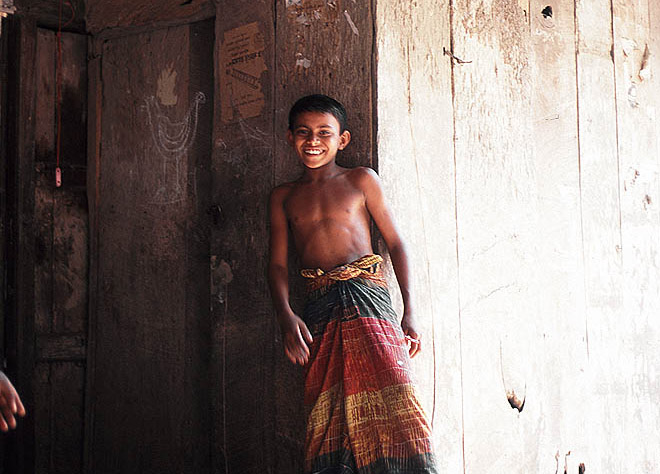 🇧🇩 Bangladesh and 5 moreLungiলুঙ্গি
A tube of cotton tied at the waist, worn by men across South Asia and beyondCotton · Checks and stripes · Batik
 🇮🇳 India and 1 moreHandloom sari
Saris woven by hand on village looms in India and BangladeshSilk · Brocade · Zari work