
Koorai silk sari
In its own language: கூரை பட்டு புடவை
A nine-yard silk and cotton bridal sari from Koranad, checked, for Tamil Hindu weddings
Koorai silk sari is a nine-yard bridal cloth woven in Koranad, a part of Mayiladuthurai in Tamil Nadu, by the Sāliyan weaver community. It blends silk with fine mercerized cotton in a 2:1 ratio, carries small woven checks and a contrasting seer pallu, and is draped the madisar way for Tamil Hindu weddings.
- Woven in Koranad, now part of Mayiladuthurai in Tamil Nadu
- Nine yards long and about 1.33 yards wide, draped the madisar way
- Silk and mercerized cotton in a two to one blend, with small checks
- One sari takes six to ten days and about 13,000 hand and leg movements
- By the 2020s, only about twenty to thirty weavers were still working
What is Koorai silk sari?
The Koorai silk sari is a nine-yard sari from Koranad, a locality of Mayiladuthurai in Tamil Nadu. Sāliyan weavers make it, and brides wear it. The cloth mixes silk with finely twisted mercerized cotton, roughly two parts silk to one of cotton, which gives a light fabric with a silk-like feel. Woven into it are small checks, made where the lengthwise and crosswise threads interlace. A seer pallu, the decorated end, usually sits in a contrasting shade. Colours range through green, yellow, maroon and red.
Where does Koorai silk sari come from?
The sari's name comes from Koorai Naadu, the old name for what is now Koranad. Local tradition links the craft to Nesa Nayanar, a Nayanar saint remembered for weaving cloth for devotees of Shiva, and to the Sāliyan community, who trace their descent to Sāliya Mahā Rishi in the Sthalapurānam of the Nallādai temple. Tradition places it at nearly five thousand years old, and the infobox dates it to the 30th century BCE. Early versions were cotton; silk came in by the early twentieth century, and the sari stayed a leading bridal cloth into the 1950s. Co-Optex took up a revival in 2014 under T. N. Venkatesh.
How is Koorai silk sari made?
It is woven by hand on pit looms, raised pit looms or frame looms. Setting up a loom can take a week on its own, and one sari takes about six to ten days, with roughly thirteen thousand movements of hand and leg. The weaver works pure silk together with fine-twisted mercerized cotton in a two to one proportion. Small checks come from the way warp and weft cross. Synthetic dyes give the bright shades the sari is known for. The result is a light cloth that handles like silk.
Koorai silk sari, drawn
Colours, motifs and borders
Checks are the sari's mark, small ones, and they take skill to keep even. The pallu, called the seer pallu, is often woven in a colour that contrasts with the body. Older saris had a pallu on both sides; today a single-sided pallu is more common. Some versions carry a wide border. Pattern ideas are drawn from nature and from marriage custom. Besides green and yellow, the palette can hold maroon, red, purple, dark pink and turmeric yellow.
How Koorai silk sari is worn
Koorai saris are nine yards long and about 1.33 yards wide. That length suits the madisar drape, the Tamil way of tying a sari in which the lower half is arranged like a dhoti and the upper half like an ordinary sari. Tradition gives the drape a symbolic reading: the lower half is seen as masculine, the upper as feminine, and the two together as a union.


When Koorai silk sari is worn
Brides wear it for Tamil Hindu weddings, above all at the rite when the groom ties the wedding thread, a step held to bless the marriage with harmony. Green on the cloth stands for fertility and growth, yellow for prosperity. Saris with a wide border are sometimes given to temples as offerings. Some communities still keep it as part of bridal dress, even as fashions shift.
Styles of Koorai silk sari
Two kinds of pallu appear in the record: the earlier double-sided one and the single-sided pallu in a contrasting colour that most weavers now produce. Colour has widened too, from the older greens and yellows to maroon, red, purple, dark pink and turmeric yellow. Versions with a broad border are made for temple offering. The sources do not compare handloom and powerloom versions of this sari.
What Koorai silk sari means
The sari carries a Tamil wedding's memory and a weaving family's livelihood. Its makers, the Sāliyan, once numbered in the thousands; by the 2020s only about twenty to thirty active weavers were counted, and some reports put the number in local cooperatives as low as five. Younger people have moved to other work, demand has thinned and few know the cloth. Co-operative help, fresh designs and publicity are the revival tools. A Geographical Indication application has been filed and is under review.
Questions people ask about Koorai silk sari
Where does the Koorai silk sari come from?
From Koranad, earlier called Koorai Naadu, a locality in Mayiladuthurai, Tamil Nadu, in southern India. The Sāliyan weaving community there makes it, and tradition ties the craft to the Nallādai temple and to the saint Nesa Nayanar.
How is it made?
It is handwoven on pit, raised pit or frame looms. Pure silk is worked with fine-twisted mercerized cotton in a two to one ratio, and small checks form where the warp and weft cross. A loom takes a week to set up; one sari takes six to ten days.
Who wears it?
Tamil Hindu brides, mainly. It is worn for the wedding rite when the groom ties the marriage thread, and its green and yellow are read as signs of fertility and prosperity. Saris with wide borders are also given to temples.
Is it still woven?
Barely. The trade has shrunk from thousands of weavers to roughly twenty or thirty in the 2020s, with some reports of only five left in local cooperatives. Co-Optex began a revival effort in 2014, and a Geographical Indication application is under review.
What does it look like?
Green, yellow, maroon and red are common, and purple, dark pink and turmeric yellow also appear. The body is covered in small woven checks, and the pallu, the decorative end, is usually woven in a contrasting colour.
Good reading and sources
The facts on this page come from the Wikipedia article "Koorai silk sari", written by its contributors and used under the CC BY-SA 4.0 licence, and from its Wikidata record (CC0). EveryPallu rewrote the text in its own words, with AI assistance, and compares every page with the article to make sure no passage is copied. It may be reused under the same CC BY-SA 4.0 licence with a link back.
It may contain mistakes. Traditions, weaves and prices differ from one weaver, town or shop to the next, and it is not buying advice. If something is wrong, tell us. Last refreshed 2026-10-15.
More from India
All the sarees of India 🇮🇳 IndiaUttariya
Ancient Indian upper garment of loose cloth draped over shoulders and armsCotton
🇮🇳 IndiaDorea
A striped or checked cloth of the Indian subcontinent, first cotton then silkCotton · Checks and stripes
🇮🇳 India and 1 moreAgrun
A shuttle-woven Hajong shawl with big, symmetrical brocaded patternsSilk · Brocade · Zari work
🇮🇳 IndiaTansukh cloth
A fine cotton cloth of medieval India, used for women's bodices and sarisCotton
Its cousins elsewhere
All silk sarees 🇮🇳 IndiaPhanekꯐꯅꯦꯛ
A wrapped skirt worn by Meitei women in Manipur, woven with patterned stripesMuga · Checks and stripes · Embroidery
 🇹🇭 ThailandPanungผ้านุ่ง
A long cotton cloth wrapped at the waist and worn below the knee in ThailandCotton · Checks and stripes
 🇮🇩 Indonesia and 5 moreSarongsarung
A tubular waist-wrap of batik or checks, worn across Asia, Africa and the Pacific.Cotton · Batik · Ikat
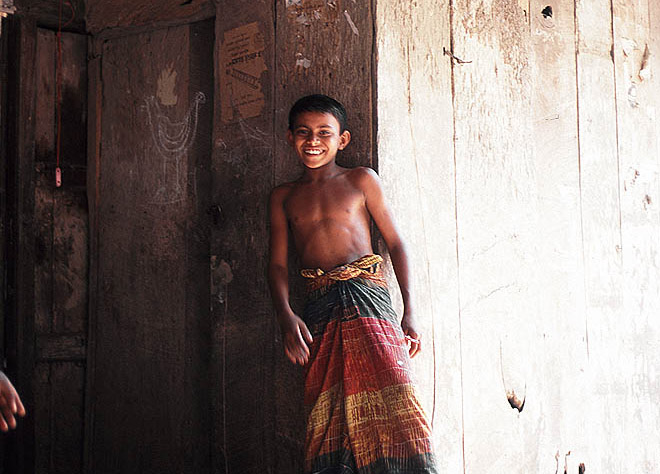 🇧🇩 Bangladesh and 5 moreLungiলুঙ্গি
A tube of cotton tied at the waist, worn by men across South Asia and beyondCotton · Checks and stripes · Batik