
Parang batik
In its own language: ꧋ꦧꦠꦶꦏ꧀ꦥꦫꦁ
A diagonal Javanese batik motif of interlocking S shapes, read as ocean waves
Parang is one of the oldest batik motifs from Java, Indonesia. Javanese craftswomen draw or stamp it in wax, and the diagonal rows of interlocking S shapes are read as ocean waves and as continuity; the sources link it to the Mataram court.
- Parang is one of the oldest batik motifs in Indonesia.
- Its name comes from a Javanese word for slope.
- The S-shaped lines are read as ocean waves.
- Sultan Agung of Mataram is credited with creating the motif.
- Indonesian batik was inscribed by UNESCO in 2009.
What is Parang batik?
Parang is one of the oldest motifs in Indonesian batik, from Java. It is built from diagonal rows of S-shaped lines that run from high to low; the name comes from a Javanese word for slope. The S forms are read as ocean waves, and because they join without a break they suggest continuity. Batik is made with wax: craftswomen in Java draw the pattern with a canting, a small pen that holds hot wax, or stamp it with a cap. The motif appears on cambric, silk and cotton. In Javanese tradition it carried a moral charge, and the sources say kings and knights wore it while others were not allowed.
Where does Parang batik come from?
Parang belongs to the batik tradition of Java. The sources place its beginnings in the Kartasura and Mataram palace era, in what is now Central Java. Sultan Agung of Mataram is credited with creating it after a visit to the southern coast, where the waves at Parangtritis gave him the idea. A separate account says Parang Rusak was made by Penembahan Senapati during meditation on the same coast. These are traditional attributions, not dated records. The motif stayed a royal and philosophical design, with named variants from Parang Rusak to Parang Slobog.
How is Parang batik made?
Parang is a batik motif, so its making follows batik methods. The sources name two: written batik, batik tulis, and stamped batik, batik cap. In the source photograph, Javanese craftswomen draw intricate patterns with a canting, a small pen, using wax kept hot and liquid in a heated pan. The infobox lists cambric, silk and cotton as materials. The article does not describe dye batches, loom time or a workshop routine. What it stresses is the drawing of the motif: diagonal S lines that must interlock without a break, since that unbroken run carries the meaning of continuity.
Parang batik, drawn
Colours, motifs and borders
The design is a diagonal field. Rows of S-shaped lines descend across the cloth, and the S forms are said to come from ocean waves. The lines meet without a break, which the sources read as continuity. A vertical line between the S shapes is also given meaning: loyalty and continuation in life. The motif has named variants. Parang Rusak is linked to Penembahan Senapati; Parang Barong is larger and credited to Sultan Agung; Parang Klitik is smaller and softer, associated with princesses; Parang Slobog is used at inaugurations. The sources do not name colours for the motif.
How Parang batik is worn
No saree drape is described in the sources. Parang is a motif applied to batik cloth, and the article talks about who wore it rather than how a length was tied. Javanese kings and knights are said to have worn parang batik every day, and only they were permitted to use it. Parang Klitik was used by the king's daughter. The cloth materials named are cambric, silk and cotton. Blouse, petticoat and pleating details are outside this source.


When Parang batik is worn
The motif is tied to royal and court life. The sources say Javanese kings and knights wore parang batik continually, and that only kings and knights were allowed to wear it. Parang Slobog is named for inauguration ceremonies, where it is meant to express determination, care and patience. Parang Klitik is associated with the king's daughter and with gentleness. Parang Rusak and Parang Barong carry teachings about self-control. No wedding, festival or mourning use is given in the sources. The article also does not describe everyday wear outside the court.
Styles of Parang batik
Four variants are named. Parang Rusak is credited to Penembahan Senapati and is linked to meditation on the south coast. Parang Barong is a larger version, created by Sultan Agung. Parang Klitik is smaller and finer, described as feminine, and was used by the king's daughter. Parang Slobog is for inaugurations. The sources do not compare handloom and powerloom versions, nor do they describe printed imitations. They present these as named motif types within the parang family, not as separate textiles.
What Parang batik means
Parang carries a courtly philosophy. Its unbroken S lines are read as persistence, family continuity and the bond between parents and children. The diagonal is also a lesson in striving and in fighting one's own desires rather than other people. The sources say kings and knights treated the motif as a daily discipline, almost like a religion. Indonesian batik, including written and stamped batik, is on UNESCO's Representative List of the Intangible Cultural Heritage of Humanity, inscribed in 2009. The article does not discuss weavers' incomes, revival campaigns or film use.
Questions people ask about Parang batik
Where does Parang batik come from?
It is an Indonesian batik motif from Java. The sources tie its development to the Kartasura and Mataram palace era in Central Java, and credit Sultan Agung of Mataram with creating it after visiting the southern coast at Parangtritis.
How is Parang batik made?
It is made as batik, using wax. The sources name written batik, batik tulis, where craftswomen draw patterns with a canting and hot wax, and stamped batik, batik cap. The motif appears on cambric, silk and cotton.
What does the parang motif look like?
It is a diagonal design of S-shaped lines running from high to low. The S forms interlock without a break and are compared to ocean waves. A vertical line between them is also part of the pattern.
Who was allowed to wear parang batik?
The sources say Javanese kings and knights wore it, and that only kings and knights were allowed to use it. Parang Klitik was used by the king's daughter. Parang Slobog was for inauguration ceremonies.
What are the main parang variants?
The article names Parang Rusak, Parang Barong, Parang Klitik and Parang Slobog. They differ in size and use: Barong is larger, Klitik smaller and feminine, and Slobog is associated with inaugurations.
Good reading and sources
The facts on this page come from the Wikipedia article "Parang (batik)", written by its contributors and used under the CC BY-SA 4.0 licence, and from its Wikidata record (CC0). EveryPallu rewrote the text in its own words, with AI assistance, and compares every page with the article to make sure no passage is copied. It may be reused under the same CC BY-SA 4.0 licence with a link back.
It may contain mistakes. Traditions, weaves and prices differ from one weaver, town or shop to the next, and it is not buying advice. If something is wrong, tell us. Last refreshed 2026-11-02.
More from Indonesia
All the sarees of Indonesia 🇮🇩 IndonesiaBalinese textiles
The woven cloths of Bali, from sacred double ikat to gold-dusted ceremony wearCotton · Ikat · Brocade
 🇮🇩 Indonesia and 5 moreBatikꦧꦛꦶꦏ꧀
A wax-resist dyeing technique from Java, used for patterned cloth.Silk · Batik · Hand painting
 🇮🇩 IndonesiaGeringsingᬕ᭄ᬭᬶᬂᬲᬶᬂ
A sacred double ikat cloth woven only in Tenganan, a Bali Aga village in BaliCotton · Ikat
 🇨🇳 China and 5 moreBrocade
A decorative shuttle-woven cloth with an extra weft, used for Banarasi saris.Silk · Brocade · Zari work
Its cousins elsewhere
All silk sarees 🇮🇩 Indonesia and 5 moreSarongsarung
A tubular waist-wrap of batik or checks, worn across Asia, Africa and the Pacific.Cotton · Batik · Ikat
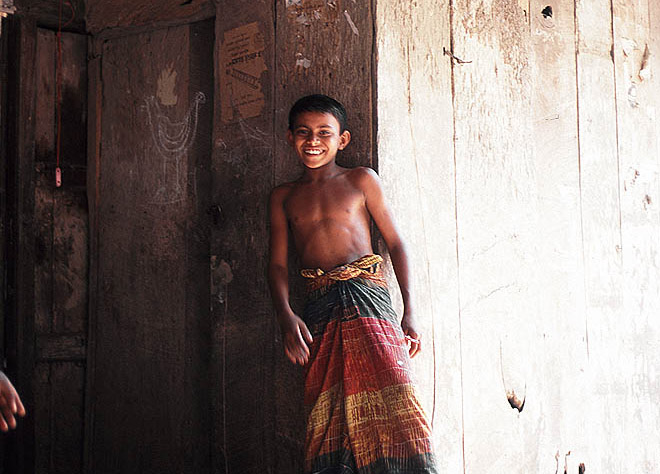 🇧🇩 Bangladesh and 5 moreLungiলুঙ্গি
A tube of cotton tied at the waist, worn by men across South Asia and beyondCotton · Checks and stripes · Batik
 🇮🇳 IndiaShantiniketan Batik
A hand-painted batik from Santiniketan, West Bengal, brushed with natural dyesBatik · Hand painting
 🇲🇲 MyanmarLongyiလုံချည်
A tube of cloth worn in Myanmar, folded at the waist without a knotCotton · Checks and stripes · Batik