
Kitenge
A thicker wrapped African cloth, often printed in bright wax patterns
A kitenge is a piece of fabric similar to a sarong, worn by women in East, West and Central Africa around the waist, chest or head. It is thicker than kanga or kikoi, usually printed with bright wax designs, and serves as inexpensive informal clothing.
- A kitenge is a sarong-like wrap worn in East, West and Central Africa.
- It is thicker than kanga or kikoi and has an edging on one long side.
- Wax prints are made by an industrial form of Indonesian batik.
- In Malawi it is called chitenje and is customary at funerals.
- Men in Malawi were encouraged to wear kitenge on Fridays.
What is Kitenge?
Kitenge is a length of cloth used like a sarong in East, West and Central Africa. Women wrap it at the waist or chest, put it over the head, or use it to carry a baby. It is thicker than kanga and kikoi, with an edging along one long side. The cloth is brightly patterned and works as plain informal wear. Kitenges are made as wax prints, using an industrial form of batik. In Malawi the same cloth is called chitenje; in Namibia and parts of Zambia, chitenge. Men sometimes tie one at the waist in hot weather.
Where does Kitenge come from?
Kitenge belongs to East, West and Central Africa, and versions are worn across many countries. Its printing method comes from an industrial form of batik, a technique that began in Indonesia. Kitenges are often confused with kangas. The difference given is text: kangas carry writing, while kitenges usually do not. In Malawi, men did not traditionally wear kitenge. That changed when the president asked civil servants to support Malawian products by wearing one on Fridays.
How is Kitenge made?
The pattern is printed, not woven in. Printers use a factory version of traditional batik, and the result is called wax print. In good wax prints the design is clear and bright on both sides. Modern wax prints are mostly roller printed, so less colour reaches the reverse. Designs can be religious, political or tribal. The cloth is also cut and sewn into dresses, blouses and trousers. The sources do not name the fibre used.
Kitenge, drawn
Colours, motifs and borders
Colour and pattern are the main visual features. Kitenge cloth is described as colourful, with many designs, and some pieces carry political slogans. Wax print designs may be religious, political or drawn from traditional tribal patterns. Along coastal Kenya and in Tanzania, Swahili sayings appear on many kitenges, though the article notes that text is more typical of kangas and that kitenges usually have none. A kitenge has an edging on just one long side. The print is meant to be bright and detailed on the front, and older wax prints also show it on the back.
How Kitenge is worn
It is a wrap, not a stitched garment. A woman can tie it round her waist, cover her chest with it, drape it over her head as a scarf, or use it as a sling to carry a baby on her back or front. Men sometimes wear one at the waist in hot weather. At the beach it may be wrapped over a swimming suit for modesty or warmth. It can also be tied with others as table decoration or hung as wall art. The sources do not give a fixed length or a blouse and petticoat.


When Kitenge is worn
Kitenge is described as inexpensive informal clothing, so it suits everyday wear. In Malawi it is customary for women to wear kitenge at funerals, which makes it part of mourning dress there. It is given as a gift to young women. Women take it to the beach to cover a bathing suit or keep off cold air. In towns, young people use kitenge in fashion, including hoodies, trousers and bags. In Malawi, civil servants were encouraged to wear kitenge on Fridays to support local products.
Styles of Kitenge
Names change with place. Malawi says chitenje; Namibia and some Zambian areas say chitenge. Swahili uses kitenge singular and vitenge plural; Tonga uses zitenge. The cloth sits near kanga and kikoi but is thicker and has an edging on only one long side. Kangas carry text, while kitenges usually do not, though coastal Kenya and Tanzania are described as having kitenges with Swahili sayings. Wax prints may be traditional batik-style or modern roller prints. Kitenge also appears as dresses, blouses, trousers, hoodies, bags and framed art.
What Kitenge means
Kitenge carries messages as well as covering the body. It can show religious or political designs, tribal patterns or slogans, and in some coastal areas Swahili sayings. In Malawi it became a symbol of buying local when the president asked civil servants to wear Malawian kitenge on Fridays. Women wear it at funerals, give it to young women, and use it for babies. Urban youth have taken it into pop fashion. The sources do not mention a Geographical Indication or official heritage listing.
Questions people ask about Kitenge
Where does kitenge come from?
The sources describe it as an East, West and Central African cloth. It is worn in countries including Kenya, Tanzania, Uganda, Malawi, Nigeria, Ghana, Senegal, Rwanda, Burundi and the Democratic Republic of the Congo, but no single place of origin is named.
How is kitenge made?
The pattern is printed with an industrial version of traditional batik, producing wax prints. Modern wax prints are mostly roller printed, so less colour shows through to the back. The cloth is then used as a wrap or sewn into dresses, blouses, trousers and bags.
Is kitenge the same as kanga?
No. The sources say kitenge is thicker than kanga and has an edging on only one long side. Kangas carry text, while kitenges usually do not. Coastal Kenya and Tanzania are still described as having kitenges with Swahili sayings.
How is kitenge worn?
It is wrapped around the waist or chest, worn over the head as a scarf, or used as a baby sling. Men sometimes tie it at the waist in hot weather. At the beach it can cover a swimming suit.
What is it called in Malawi?
In Malawi the cloth is called chitenje. Women customarily wear it at funerals, and the president encouraged civil servants to wear Malawian kitenge on Fridays. In Namibia and parts of Zambia the name is chitenge.
Good reading and sources
- Kitenge on WikipediaEncyclopedia
- More photos on Wikimedia CommonsPhotos and video
- Wikidata recordOpen data
The facts on this page come from the Wikipedia article "Kitenge", written by its contributors and used under the CC BY-SA 4.0 licence, and from its Wikidata record (CC0). EveryPallu rewrote the text in its own words, with AI assistance, and compares every page with the article to make sure no passage is copied. It may be reused under the same CC BY-SA 4.0 licence with a link back.
It may contain mistakes. Traditions, weaves and prices differ from one weaver, town or shop to the next, and it is not buying advice. If something is wrong, tell us. Last refreshed 2026-11-04.

Its cousins elsewhere
 🇮🇳 IndiaShantiniketan Batik
A hand-painted batik from Santiniketan, West Bengal, brushed with natural dyesBatik · Hand painting
 🇮🇩 Indonesia and 5 moreSarongsarung
A tubular waist-wrap of batik or checks, worn across Asia, Africa and the Pacific.Cotton · Batik · Ikat
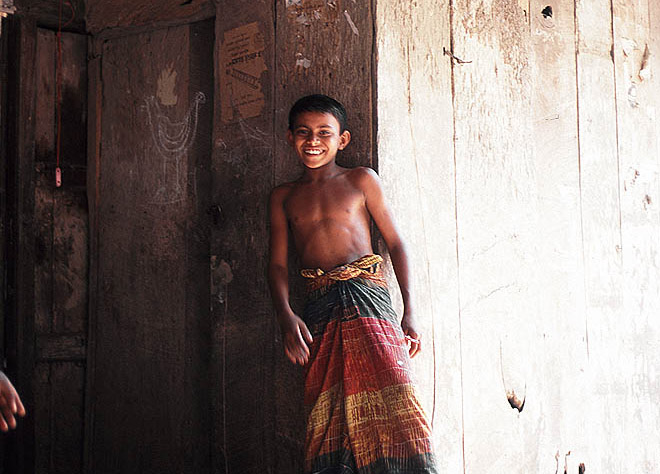 🇧🇩 Bangladesh and 5 moreLungiলুঙ্গি
A tube of cotton tied at the waist, worn by men across South Asia and beyondCotton · Checks and stripes · Batik
 🇲🇲 MyanmarLongyiလုံချည်
A tube of cloth worn in Myanmar, folded at the waist without a knotCotton · Checks and stripes · Batik