Kasaragod saree
A handwoven cotton sari from Kasaragod, Kerala, made for everyday wear
A handwoven cotton sari from Kasaragod district in northern Kerala, made by weavers of the Saliya community. The body is plain or striped with dyed yarn, the border is worked on Jacquard or Dobby looms, and vat dyes and a high thread count give it the sturdiness that keeps it in daily use.
- Woven by the Saliya community in Kasaragod district, Kerala
- One of four weaving traditions in Kerala, with Balaramapuram, Kuthampally and Chendamangalam
- Thread counts run from 60 to 100, and vat dyes are used
- Recognised as a Geographical Indication in 2010, applied for in 2009
- The weavers' cooperative has been running since 1938
What is Kasaragod saree?
The Kasaragod saree is a cotton sari woven by hand in Kasaragod district, at the northern tip of Kerala. The weavers belong to the Saliya community, and this is one of four weaving traditions still working in the state. The cloth is described as durable, made to be worn rather than stored. Its body is usually plain or striped with dyed yarn, and the border is worked by hand on Jacquard or Dobby equipment, which gives it a firm patterned edge. It stands apart from the ordinary Kerala sari and carries something of the look of the Karavali coast to its north.
Where does Kasaragod saree come from?
This weaving tradition is traced to the 18th century. Two streams of weavers are credited with starting it: members of the Saliya community who moved from the Karavali coast towards Tamil Nadu, and Pathmasaliyas who came from the Kingdom of Mysore and settled in the area. Both groups brought their looms with them and made their homes in what is now Kasaragod district. The saree stayed a local craft rather than spreading widely. It is counted as one of four surviving weaving traditions in Kerala, along with Balaramapuram, Kuthampally and Chendamangalam. The Kasargod Weavers' Cooperative Production and Sale Society, set up in 1938, has carried the work forward since.
How is Kasaragod saree made?
Yarn is dyed before it reaches the loom, and vat dyes are used, one reason the colour holds and the saree lasts. The thread count is high, between 60 and 100, which gives a close and substantial cloth. The body is woven plain or in stripes. The border takes the extra work: it is made by hand on Jacquard or Dobby shedding, so its pattern is set by the loom mechanism rather than picked in by hand. Recent versions mix silk into the yarn. The cooperative runs the looms, sells what is woven and trains new weavers.
Kasaragod saree, drawn
Colours, motifs and borders
Design here is quiet. The body carries either no pattern at all or simple stripes formed from dyed yarn. Colour comes from the dyed yarn itself, not from printing or painting, and the sources do not name particular shades or motifs. The border is where the eye is drawn. Worked on Jacquard or Dobby looms, it can carry a woven figure or band, and it sits strongly against the plainer field of the body. No design for the end piece is described.
How Kasaragod saree is worn
The saree is a length of cotton cloth worn in the usual way, wrapped and pleated with one end brought over the shoulder. The sources say nothing about a drape particular to Kasaragod, and they treat the saree as distinct from the general Kerala sari rather than tied to one method of tying. What they do stress is that it is made for wearing often: a plain, hard-wearing cloth rather than something kept aside for display.
When Kasaragod saree is worn
The Kasaragod saree is an everyday saree. The sources describe steady patronage for it because the cloth suits daily use, and that is the occasion they return to. They do not tie it to weddings, to a particular festival, to fasts or to rites. Its place is practical and continuous: the saree a woman reaches for on an ordinary working day, made sturdy enough to take regular wear.
Styles of Kasaragod saree
Older Kasaragod sarees are pure cotton. Recent versions blend silk into the yarn, which changes the sheen and the feel of the cloth. The saree also differs from the traditional Kerala sari as a class, and it shows the influence of Karavali styles from the coast to its north. Within Kerala it is one of four weaving traditions, the others being Balaramapuram, Kuthampally and Chendamangalam, each with its own look. The sources do not compare handloom and powerloom versions.
What Kasaragod saree means
The saree is a working tradition with official standing. The Government of Kerala applied for a Geographical Indication in 2009, and the Government of India recognised Kasaragod sarees as a Geographical Indication in 2010, which ties the name to cloth woven in the district. Behind that is a livelihood: the Kasargod Weavers' Cooperative Production and Sale Society, founded in 1938, produces and markets the sarees and trains weavers. Counting it among Kerala's four surviving weaving traditions is itself an argument for keeping the looms going.
Questions people ask about Kasaragod saree
Where does the Kasaragod saree come from?
It comes from Kasaragod district in northern Kerala, India, where weavers of the Saliya community make it. The tradition is traced to the 18th century, when Saliya weavers moved from the Karavali coast and Pathmasaliyas arrived from the Kingdom of Mysore.
How is the Kasaragod saree made?
Yarn is dyed, often with vat dyes, then woven by hand at a high thread count of 60 to 100. The body is plain or striped, and the border is worked on Jacquard or Dobby looms. Some recent versions use a silk blend.
Is it different from other Kerala sarees?
Yes. The sources describe it as distinct from the traditional Kerala sari, with influences from the neighbouring Karavali styles. It is one of four weaving traditions in Kerala, the others being Balaramapuram, Kuthampally and Chendamangalam.
Does it have Geographical Indication status?
It does. The Government of Kerala applied for a Geographical Indication for Kasaragod sarees in 2009, and the Government of India recognised it officially in 2010.
When is it worn?
Mostly for daily use. The sources say the saree enjoys steady patronage because it suits everyday wear, and they do not link it to a particular festival, wedding or ceremony.
Good reading and sources
The facts on this page come from the Wikipedia article "Kasaragod saree", written by its contributors and used under the CC BY-SA 4.0 licence, and from its Wikidata record (CC0). EveryPallu rewrote the text in its own words, with AI assistance, and compares every page with the article to make sure no passage is copied. It may be reused under the same CC BY-SA 4.0 licence with a link back.
It may contain mistakes. Traditions, weaves and prices differ from one weaver, town or shop to the next, and it is not buying advice. If something is wrong, tell us. Last refreshed 2026-10-15.
More from India
All the sarees of India 🇮🇳 IndiaUttariya
Ancient Indian upper garment of loose cloth draped over shoulders and armsCotton
🇮🇳 IndiaDorea
A striped or checked cloth of the Indian subcontinent, first cotton then silkCotton · Checks and stripes
🇮🇳 India and 1 moreAgrun
A shuttle-woven Hajong shawl with big, symmetrical brocaded patternsSilk · Brocade · Zari work
🇮🇳 IndiaTansukh cloth
A fine cotton cloth of medieval India, used for women's bodices and sarisCotton
Its cousins elsewhere
All cotton sarees 🇮🇳 IndiaPhanekꯐꯅꯦꯛ
A wrapped skirt worn by Meitei women in Manipur, woven with patterned stripesMuga · Checks and stripes · Embroidery
 🇹🇭 ThailandPanungผ้านุ่ง
A long cotton cloth wrapped at the waist and worn below the knee in ThailandCotton · Checks and stripes
 🇮🇩 Indonesia and 5 moreSarongsarung
A tubular waist-wrap of batik or checks, worn across Asia, Africa and the Pacific.Cotton · Batik · Ikat
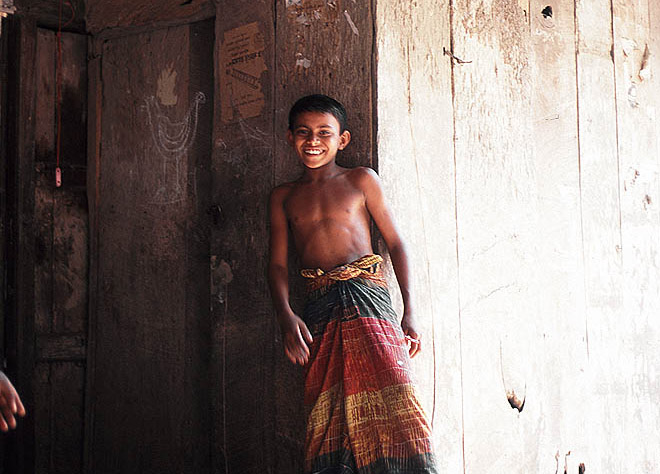 🇧🇩 Bangladesh and 5 moreLungiলুঙ্গি
A tube of cotton tied at the waist, worn by men across South Asia and beyondCotton · Checks and stripes · Batik