
Kaunakes
An ancient Sumerian woollen wrap with tufts that mimic sheepskin
A kaunakes was a woollen mantle from Sumer, worn in ancient Mesopotamia as a wrap skirt or shoulder covering. Its tufted surface copied the look of sheepskin, first with fleece and later with wool tufts sewn or looped into woven cloth.
- A kaunakes was a tufted woollen mantle from ancient Sumer.
- Men and women wore it as a wrapped skirt in the Early Dynastic Period.
- Around 2500 BC woven wool replaced sheepskin, but the tufts stayed.
- High-status wearers had longer skirts; servants and soldiers wore short ones.
- Athenians used it in Aristophanes' Wasps as a visually distinctive costume.
What is Kaunakes?
A kaunakes was a woollen mantle from Sumer, worn in ancient Mesopotamia. It began as a sheepskin wrap and later was made from woven wool. Both men and women wore it. The cloth had a tufted surface that suggested overlapping petals or feathers. Tufts could be sewn onto the garment or looped into the fabric. Early Sumerian images also show a fitted kilt or net dress before the kaunakes. Servants and soldiers wore short versions; people of high status wore longer ones, sometimes to the ankles.
Where does Kaunakes come from?
The kaunakes is linked to Sumer. In the Early Dynastic Period, between 2700 and 2350 BC, it was a unisex garment. A skirt was cut from sheepskin, worn with the skin turned inward, and the wool tufts were combed or ornamented. Around 2500 BC woven wool replaced the sheepskin, but the tufted look continued. The Greeks used the name kaunakes. Athenians first thought the dress Persian, then Babylonian. The word's root is closer to an Iranian language, which added to the confusion. Coptic Egypt is credited with a woven tapestry design that projected long wool locks and helped shape the mantle.
How is Kaunakes made?
The earliest kaunakes were made of sheepskin, camel hide or goat hide. Wool or goat hair was also used. The tufted effect came from sewing tufts onto cloth or weaving loops into the fabric. In Coptic Egypt, woven tapestry was used to project long strands of wool, and this fringe-like surface imitated fleece and fur. Over time the garment was shaped as a mantle. It was a rustic fabric and served as a shawl or skirt.
Kaunakes, drawn
Colours, motifs and borders
The surface was the main design. Tufts were laid in horizontal rows and hung vertically, making a pattern that looked like overlapping petals or feathers. The overall shape could have ample, bell-like volume at the waist and legs. Length carried status: short for servants and soldiers, longer for people of high rank, sometimes reaching the ankles. The upper body was either left bare or covered with another sheepskin cloak over the shoulders. One image shows the wrap adorning the left arm and shoulder while the right side stayed exposed.
How Kaunakes is worn
It was worn as a wraparound skirt tied at the waist, ending at the knees or lower depending on rank. Men and women both used it. A second sheepskin could be spread across the shoulders as a cloak. Some images show the wrap crossing over the left shoulder. In winter it served as a shawl over the shoulders; in summer it was adapted as a skirt. Later versions gained sleeves, then returned to a sleeveless cape.


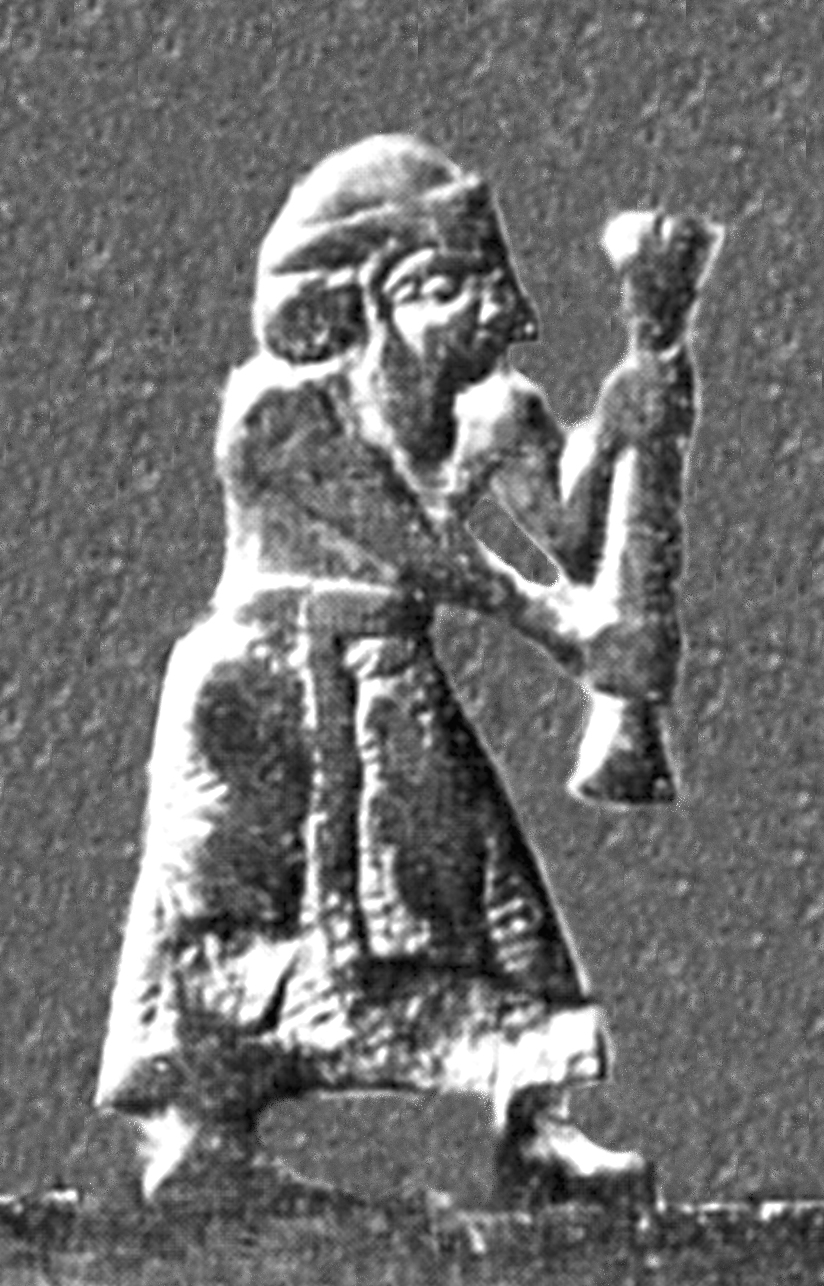

When Kaunakes is worn
Short kaunakes suited servants and soldiers. Longer ones marked high status, and from about 2450 BC the dress was royal attire in Mesopotamia. Figures shown in prayer wear it, and an image from the Temple of Ishtar at Mari in Syria shows it wrapped around a seated woman. In Athens a stage actor wore a kaunakes in Aristophanes' Wasps because the heavy, tufted garment looked distinctive in drama.
Styles of Kaunakes
The garment changed across time. Before the kaunakes, early Sumerian art shows a fitted kilt or net dress. The kaunakes added sheepskin bulk and tufts. Later came woven wool, then cloth versions, sleeves, and a return to a sleeveless cape. In the Greek period it could be a weighty mantle or cape made of goat hair or wool. Coptic Egypt developed a woven tapestry version with long wool strands.
What Kaunakes means
The kaunakes carried rank and ritual weight. It appears on figures in prayer and on a royal dress from about 2450 BC. Its name and origin caused debate in Athens: the garment was first read as Persian, later as Babylonian, and its name sounded closer to an Iranian root. For the stage it was chosen as an exotic, visually distinctive costume. The sources do not record a Geographical Indication or a named weaving community.
Questions people ask about Kaunakes
Where does the kaunakes come from?
It comes from Sumer in ancient Mesopotamia. Images from Mari in Syria show it, and Coptic Egypt is credited with a woven tapestry version. Athenians first thought it Persian, then Babylonian.
How is a kaunakes made?
Early examples used sheepskin, camel or goat hide. Later versions were woven wool or goat hair. Tufts were sewn onto the cloth or woven in as loops, so the surface looked like curling fleece. Coptic Egypt made a tapestry version with long wool strands.
Who wore the kaunakes?
Both men and women wore it. Servants and soldiers had short skirts, while high-status people wore longer ones. From about 2450 BC it was a royal dress in Mesopotamia. A stage actor also wore one in Aristophanes' Wasps in Athens.
What did it look like?
It was a bulky woollen wrap with tufts laid in horizontal rows. The tufted pattern suggested overlapping petals or feathers, and the shape could swell around the waist and legs like fleece. Some versions were heavy mantles or capes.
Did it have sleeves?
Over the centuries designs changed. Some versions gained sleeves and were made with cloth instead of fleece. Later the garment returned to a sleeveless cape. In the Greek period it could also be a weighty mantle made of goat hair or wool.
Good reading and sources
- Kaunakes on WikipediaEncyclopedia
- More photos on Wikimedia CommonsPhotos and video
- Wikidata recordOpen data
The facts on this page come from the Wikipedia article "Kaunakes", written by its contributors and used under the CC BY-SA 4.0 licence, and from its Wikidata record (CC0). EveryPallu rewrote the text in its own words, with AI assistance, and compares every page with the article to make sure no passage is copied. It may be reused under the same CC BY-SA 4.0 licence with a link back.
It may contain mistakes. Traditions, weaves and prices differ from one weaver, town or shop to the next, and it is not buying advice. If something is wrong, tell us. Last refreshed 2026-11-04.
Its cousins elsewhere
All wool and pashmina 🇮🇳 IndiaKani shawl
A pashmina shawl from Kanihama in Kashmir, patterned knot by knot with small wooden spoolsWool
 🇮🇳 India and 2 moreKhadi
Hand-spun woven cloth from cotton and other fibres, promoted in India's independence movementCotton
🇮🇳 IndiaJamawar
A brocaded Kashmiri shawl, sold by the yard and once worn as a noble's gownWool · Brocade
 🇮🇩 Indonesia and 5 moreIkat
A resist-dyeing method that patterns yarns before they are wovenCotton · Ikat