Sari-inspired dress
A sewn Western dress that borrows the sari's drape, colour and ornament
A sari-inspired dress is a sewn Western dress that borrows the drape, decoration and colour of the Indian sari. Designers in Europe and the United States have made them since at least 1917, and public figures wear them to formal events.
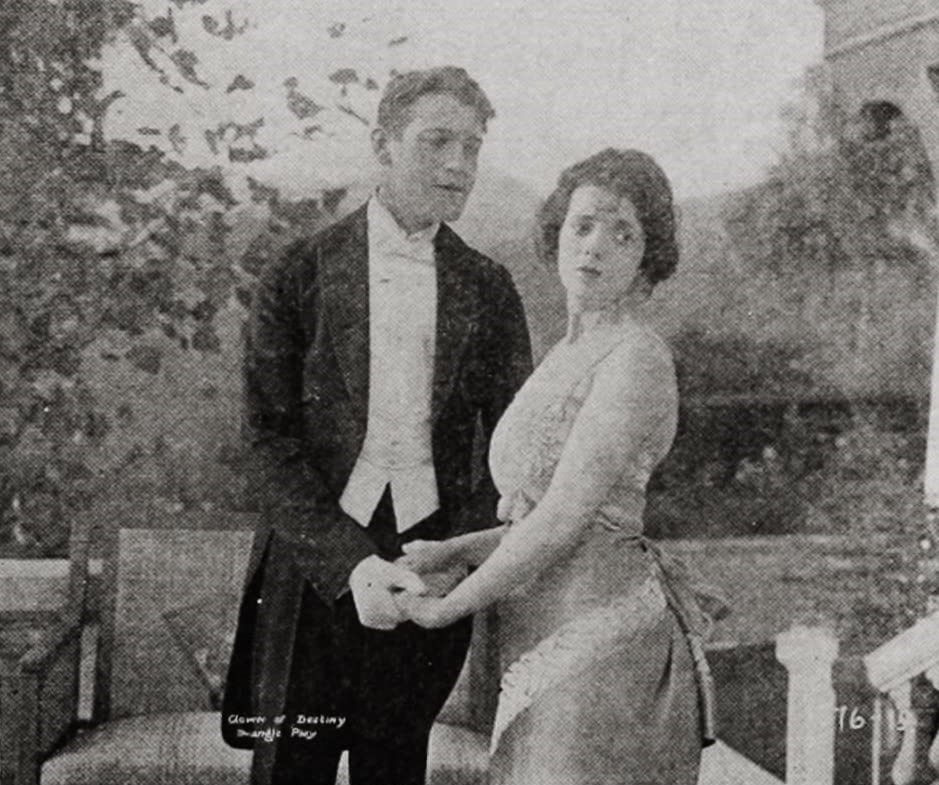
- A 1917 silent film, The Gown of Destiny, gave the sari-inspired dress an early outing.
- Jacqueline Kennedy brought saris home from her 1962 tour of India and Pakistan to remake as dresses.
- Oleg Cassini made Kennedy a pink chiffon dress in 1963; she wore it twice, once in Washington.
- Princess Diana's 1988 dress, in fuchsia and violet silk chiffon, came from Catherine Walker.
- In 2010 Marc Jacobs and Louis Vuitton made a line from vintage Indian saris.
What is Sari-inspired dress?
A sari-inspired dress is a Western garment, most often a gown or a dress, that takes something from the Indian sari and carries it into sewn clothing. What it borrows can be the fall and crossing of the cloth, the ornament, or the colour. Designers in Europe and America have made such pieces for more than a century. Chiffon, silk chiffon and crêpe turn up again and again, and beads, diamante, embroidery and lace do the work a sari's woven border would do. The wearers in the sources are public figures, not ordinary shoppers, and the setting is nearly always a formal one.
Where does Sari-inspired dress come from?
The earliest trace in the sources is a silent film of 1917, The Gown of Destiny, where such a dress appears on screen. In the late 1930s Elsa Schiaparelli designed pieces of this kind, with Princess Karam in mind, and that work is said to have led two other designers, Christian Bérard and Nada Patcevitch, to a black crêpe dress finished in gilt leather. The idea returned in force after Jacqueline Kennedy's 1962 tour of India and Pakistan, when she carried saris home intending to have them remade. Interest flared, then cooled, though designers kept coming back. Gianni Versace later said the black dress Elizabeth Hurley wore in 1994 had grown out of the sari.
How is Sari-inspired dress made?
There is no single method. The sources describe cloth cut and sewn, then decorated by hand: porcelain beads and diamante on one dress, gilt leather on another, gold lace at the hem of a third, colour-changing LEDs on a fourth. A design can begin with a photograph. The pink chiffon dress Oleg Cassini made for Jacqueline Kennedy followed a picture Howell Conant had taken a year earlier of Audrey Hepburn in a yellow chiffon dress of the same kind. In 2010 Marc Jacobs and Louis Vuitton built a line from vintage Indian saris. The sources give no timings and do not describe the tailoring in detail.
Sari-inspired dress, drawn
Colours, motifs and borders
The aim is the sari's look carried into a dress: soft cloth, ornament, strong colour. Named in the sources are pink chiffon, fuchsia and violet silk chiffon, a black gown with a gold lace border, a black and gold gown, a white gown with volume, mint green, yellow, a turquoise and gold suit with a red and gold dress beside it. Trimming ranges from beads and diamante to embroidery, lace and small lights that change colour. Shapes vary as widely: close to the figure, full and long, bare at one shoulder, or cut like a tuxedo.
How Sari-inspired dress is worn
A sari-inspired dress goes on like any other dress. Nothing is wrapped, pleated or tucked. What survives from the sari is the way cloth falls and crosses the body. One version leaves a shoulder bare, another is cut close to the figure, another falls long and full. The sources mention a full-length gown, a figure-hugging gown and a tuxedo cut in the sari's spirit. Length and line depend on the designer rather than on a rule, and no blouse piece or petticoat is described with them.

When Sari-inspired dress is worn
These dresses belong to formal, public moments. The sources place them at a museum exhibition opening, a state dinner, the Academy Awards, a red carpet and a fashion awards night, and one serves as a costume in a film. They are not daily wear. The people seen in them are public figures: a first lady, a princess, film actors, a presenter. Wearing one can signal an interest in India, or simply borrow the sari's line without putting on a sari.
Styles of Sari-inspired dress
The category is loose. Some pieces are gowns with a sari-like drape, some are dresses cut from old saris, some come as two-piece suits. Across the sources there are a sari-gown set with LEDs, a one-shouldered Oscar dress, a tuxedo reworked in the sari's spirit, and a line made from vintage saris. Designers named include Elsa Schiaparelli, Wesley Tann, Oleg Cassini, Alexander McQueen, Valentino, Armani, Marchesa and Jean Paul Gaultier, among others. No standard pattern exists, and a sewn dress raises none of the handloom or powerloom questions a woven sari does.
What Sari-inspired dress means
The dress shows how far the sari travels. It turns up in Hollywood and European fashion, on first ladies and film stars, and in the fashion press: in 1996 the magazine Elle gathered Eastern-influenced outfits, called them best without added ornament, and printed a picture of a woman running her hand down a long embroidered black chiffon gown with gold lace at the hem. Designers have used the idea both as a nod to India and as a source of shape, and one house turned old saris into new dresses. Versace traced a famous black dress of the 1990s back to the sari.
Questions people ask about Sari-inspired dress
Where does the sari-inspired dress come from?
It has no single home. The earliest example in the sources is a silent film of 1917. Interest grew after Jacqueline Kennedy's 1962 tour of India and Pakistan, when she brought saris back to be remade as dresses, and designers in Europe and America have returned to the idea since.
How is it made?
Cloth such as chiffon, silk chiffon or crêpe is cut and sewn, then hand-decorated with beads, diamante, embroidery or lace. One design began with a photograph of Audrey Hepburn. In 2010 Marc Jacobs and Louis Vuitton made a line out of vintage Indian saris.
Is it a sari?
No, it is a dress. It borrows the sari's drape, decoration and colour, but it is sewn and put on like any other dress. Nothing is wrapped or pleated, and the sources describe no blouse piece or petticoat with it.
Who wears it?
Mostly public figures at formal events. The sources name a first lady, a princess, several film actors and a presenter, seen at a museum opening, a state dinner, award ceremonies and a red carpet. One example appears as a film costume.
When did it first appear?
In 1917, in the silent film The Gown of Destiny. Elsa Schiaparelli designed sari-inspired pieces in the late 1930s, and the idea returned after 1962. Versace said a well-known black dress of 1994 grew out of the sari.
Good reading and sources
The facts on this page come from the Wikipedia article "Sari-inspired dress", written by its contributors and used under the CC BY-SA 4.0 licence, and from its Wikidata record (CC0). EveryPallu rewrote the text in its own words, with AI assistance, and compares every page with the article to make sure no passage is copied. It may be reused under the same CC BY-SA 4.0 licence with a link back.
It may contain mistakes. Traditions, weaves and prices differ from one weaver, town or shop to the next, and it is not buying advice. If something is wrong, tell us. Last refreshed 2026-11-14.
More from India
All the sarees of India 🇮🇳 IndiaUttariya
Ancient Indian upper garment of loose cloth draped over shoulders and armsCotton
🇮🇳 IndiaDorea
A striped or checked cloth of the Indian subcontinent, first cotton then silkCotton · Checks and stripes
🇮🇳 India and 1 moreAgrun
A shuttle-woven Hajong shawl with big, symmetrical brocaded patternsSilk · Brocade · Zari work
🇮🇳 IndiaBhagalpuri silk
A wild tussar silk saree crafted from forest silkworms native to IndiaTussar
Its cousins elsewhere
All silk sarees 🇮🇳 India and 1 moreSariसाड़ी
An unstitched cloth draped over the body, worn across the Indian subcontinentCotton · Brocade · Ikat
🇮🇳 IndiaPhool Patti ka Kaam
An appliqué and embroidery craft of Uttar Pradesh, once used for women's sarisCotton · Appliqué · Embroidery
 🇮🇳 IndiaKachchh shawl
A dense wool wrap from Kutch, woven in two panels and joined with a fish stitchWool · Tie-dye · Embroidery
 🇮🇳 IndiaChanderi sari
A fine silk or cotton sari woven in Chanderi, Madhya Pradesh, with zari motifsSilk · Brocade · Zari work