
Rogan painting
A cloth-painting craft from Gujarat and Afghanistan, worked in thick oil paint with a stylus
Rogan painting is a cloth-decoration craft found in India and Afghanistan. Artisans paint thick, glossy oil colours onto fabric, usually a dark ground, using a stylus for freehand work or carved brass blocks for repeating patterns; the craft also appears on sarees and lehengas.
- Rogan paint is oil-based and is applied with a stylus called a tulika.
- Freehand designs are often folded to print a mirror image on the other half.
- Kutch rogan craft holds Geographical Indication status.
- Traditional work uses five colours: white, orange, yellow, blue and green.
- Some rogan pieces add glitter or mica for shimmer.
What is Rogan painting?
Rogan painting is a way of decorating cloth with oily, brightly coloured paint. It is practised in India and Afghanistan. In Gujarat, the work is associated with the Hindu Khatri community, and families in Kutch have kept it going. The paint sits on the surface as a thick, shiny line. A stylus, called a tulika, lets the artist trail the paint in fine threads. For repeat patterns, carved brass blocks are used instead. The cloth is often a dark shade so the colours show clearly. Besides panels and hangings, the craft is applied to garments, including lehengas and sarees.
Where does Rogan painting come from?
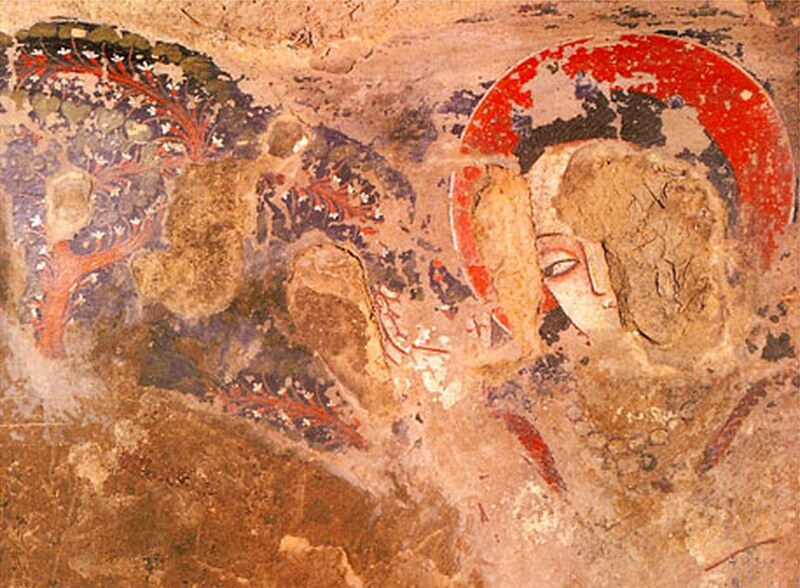
The craft's old roots are traced from Patliputra in Bihar to Bamiyan and Gujarat. UNESCO research from 2008 dated Buddhist rogan paintings to the 5th or 6th century. The name is linked to the Sanskrit word 'rangan', meaning to colour or dye. In Gujarat, the work was once common in Ahmadabad, Deesa, Palanpur, Mahesana, Banaskantha, Kutch and Patan. Women from Hindu lower castes were the main buyers, using painted cloth to prepare wedding clothes, so the work followed the wedding season. At other times artisans turned to farming. Cheap machine-made textiles in the late 20th century made hand-painted goods costlier, and many workers left the craft. Kutch rogan later received Geographical Indication status.
How is Rogan painting made?
The paint starts with castor oil boiled for about two days. Linseed, walnut or poppy seed oil can stand in for castor. Dyes taken from plants tint the oil, and a medium is stirred through to hold the colour, giving a thick, glossy paint. Freehand painting uses a tulika: the artist lifts a thin strand of paint and lays it on the cloth. Often one half of a pattern is drawn, the cloth is folded, and the wet paint prints a matching half on the other side. Nirmika rogan uses brass molds with carved patterns, called biba in Gujarati. Varnika rogan begins freehand in one colour, then adds finer brushwork; sometimes glitter or mica is added.
Rogan painting, drawn
Colours, motifs and borders
The paint is glossy and sits in raised lines. Most traditional work uses five colours: white, orange, yellow, blue and green. A dark ground is preferred because it makes those colours look stronger. Freehand pieces carry flowers, animals, folk art and the tree of life. In nirmika work, brass blocks press repeating patterns into the cloth. Folding creates a mirrored design, so a single painted half becomes a symmetrical whole. Varnika pieces add extra colours and fine brush detail, and may include glitter or mica for shimmer. Rogan work is also used on lehengas, sarees, bags, wallets, cushion covers, table cloths and wall hangings.
How Rogan painting is worn
There is no separate rogan drape in the sources. The craft is a surface decoration: it is applied to cloth that is then made into wedding wear, lehengas and sarees. Wearers use their own local way of draping. The sources do not give a blouse style, petticoat or pallu rule for rogan sarees.



When Rogan painting is worn
Rogan-painted cloth was mostly bought by women from Hindu lower castes to decorate wedding clothes, so the craft had a wedding season. Artisans worked when weddings were common and farmed or did other jobs in the quiet months. The sources also name festivals and Indian weddings for the Rogan art lehenga. Today the craft is sold to tourists and online buyers as lehengas, sarees, bags and home items. It is not described as everyday wear.
Styles of Rogan painting
The sources set out three techniques. Rogan art is freehand. Nirmika rogan uses carved brass blocks. Varnika rogan starts with a freehand base in one colour and then adds more colours with fine brushes, sometimes with glitter or mica. Freehand pieces may be folded to mirror a design. The article does not compare handloom and powerloom rogan, because the craft is painted or printed rather than woven. Contemporary products range from lehengas and sarees to wallets, bags, cushion covers, table cloths, wall hangings and pillow covers.
What Rogan painting means
Rogan craft in Kutch has Geographical Indication status. After the 2001 Gujarat earthquake, better roads, water, power and more flights brought visitors to artisan workshops. Awards raised the craft's standing. In 2010 Abdulgafur Khatri began training women, which had not been done before because families feared married-out women would reveal trade secrets. By 2015 twenty women worked with his family in Nakhtrana, and forty with the Kansara family in Madhapar. Tourist numbers fell after the 2020 pandemic. The tree of life remains a leading motif.
Questions people ask about Rogan painting
Where does rogan painting come from?
The craft is practised in India and Afghanistan. Its old roots are traced from Patliputra in Bihar to Bamiyan and Gujarat. In Gujarat, it was once common in Ahmadabad, Deesa, Palanpur, Mahesana, Banaskantha, Kutch and Patan. Kutch rogan has GI status.
How is rogan painting made?
Castor oil is boiled for about two days, though linseed, walnut or poppy seed oil may be used. Artists tint the boiled oil with dyes from plants and stir in a medium that holds the colour, giving a thick, shiny paint. They lay it on cloth with a tulika, or use carved brass blocks for nirmika work.
What is the difference between rogan art, nirmika rogan and varnika rogan?
Rogan art is freehand. Nirmika rogan uses carved brass blocks called biba. Varnika rogan starts with a one-colour freehand base, then adds finer colours with brushes, and may include glitter or mica.
What colours and motifs does rogan painting use?
Traditional work uses white, orange, yellow, blue and green. The cloth is often dark so the colours stand out. Freehand pieces show flowers, animals, folk art and the tree of life. Folding can mirror a design.
Who practises rogan painting?
In Gujarat it began among the Hindu Khatri community. Families in Kutch, including the Khatri and Kansara families, keep it alive. In 2010 training was opened to women, and by 2015 women were working in Nakhtrana and Madhapar.
Good reading and sources
- Rogan painting on WikipediaEncyclopedia
- More photos on Wikimedia CommonsPhotos and video
- Wikidata recordOpen data
The facts on this page come from the Wikipedia article "Rogan painting", written by its contributors and used under the CC BY-SA 4.0 licence, and from its Wikidata record (CC0). EveryPallu rewrote the text in its own words, with AI assistance, and compares every page with the article to make sure no passage is copied. It may be reused under the same CC BY-SA 4.0 licence with a link back.
It may contain mistakes. Traditions, weaves and prices differ from one weaver, town or shop to the next, and it is not buying advice. If something is wrong, tell us. Last refreshed 2026-11-05.
More from India
All the sarees of India 🇮🇳 IndiaUttariya
Ancient Indian upper garment of loose cloth draped over shoulders and armsCotton
🇮🇳 IndiaTansukh cloth
A fine cotton cloth of medieval India, used for women's bodices and sarisCotton
Its cousins elsewhere
 🇮🇳 IndiaKalamkari
A pen-drawn textile art from Andhra Pradesh, coloured with natural dyesCotton · Kalamkari · Block print
 🇮🇳 India and 2 moreChintzछींट
A painted or woodblock-printed floral cotton cloth originating in GolcondaCotton · Block print · Hand painting
 🇹🇿 Tanzania and 4 moreKanga
A printed cotton wrap worn in East Africa, often carrying a Swahili proverbCotton · Block print · Hand painting
 🇮🇳 India and 1 moreSariसाड़ी
An unstitched cloth draped over the body, worn across the Indian subcontinentCotton · Brocade · Ikat