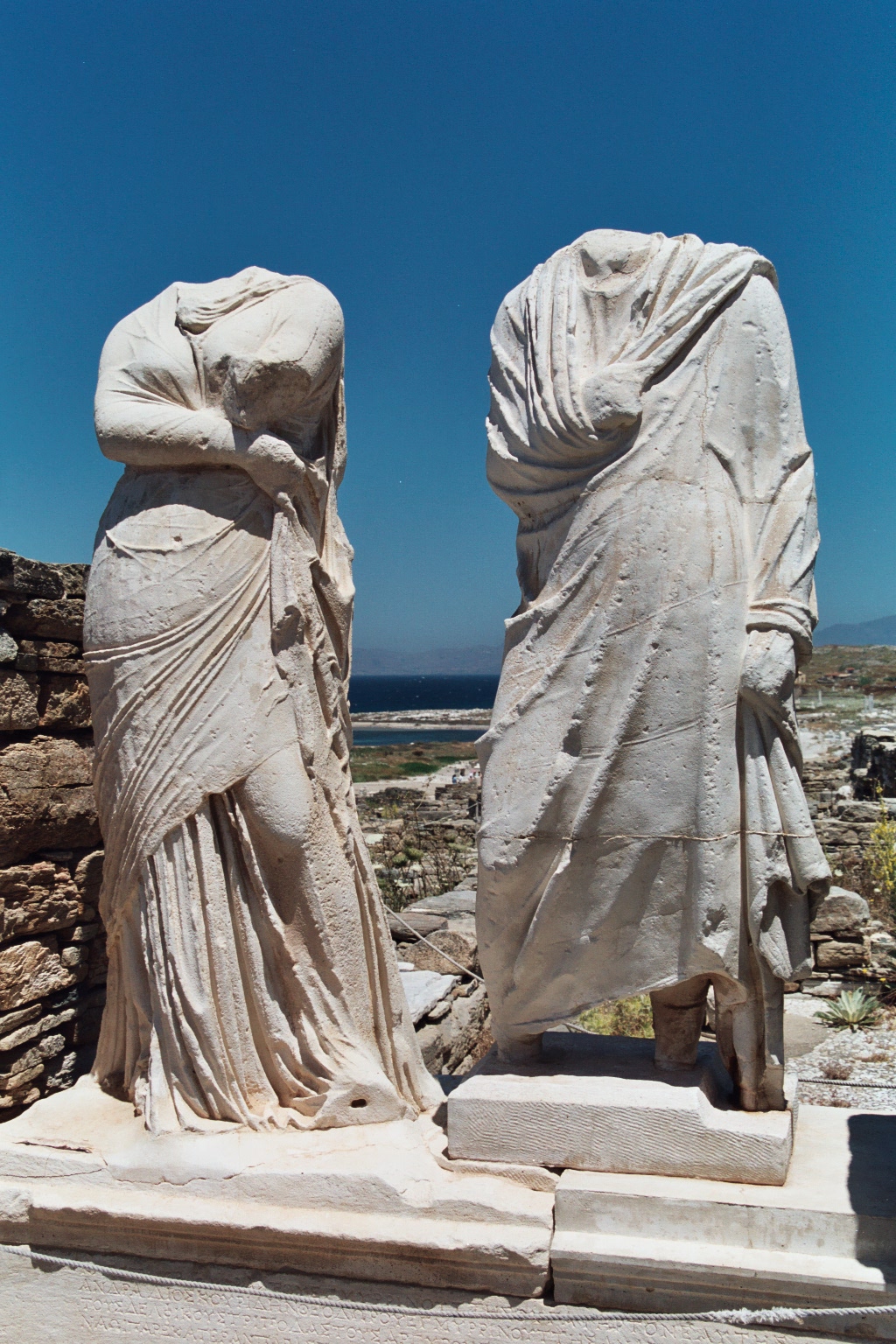
Himation
In its own language: ἱμάτιον
An ancient Greek wrap of wool or linen, draped without pins over a tunic
The himation was an ancient Greek mantle, a rectangular wrap of wool or linen worn by men and women from the Archaic to Hellenistic periods. It went over a chiton or peplos, or stood alone as both tunic and cloak, and was draped without pins; women could draw it over the face as a veil.
- Worn in ancient Greece from the Archaic through Hellenistic periods (c. 750–30 BC).
- Usually wool or linen, most often white, and draped without pins.
- Could be worn over a chiton or peplos, or alone as tunic and cloak.
- Women sometimes pulled it over the face as a veil.
- Romans adopted the style; it continued into Byzantine religious art.
What is Himation?
The himation was a large rectangular wrap worn in ancient Greece. Men and women used it from the Archaic period into Hellenistic times. It could be a mantle over a chiton or peplos, or the only garment, acting as both tunic and cloak. Sources describe it as heavier in drape than the undergarment and less bulky than the Roman toga. Wool and linen were usual, often white; quality linen was costly and linked to wealth. Women could pull it over the face as a veil.
Where does Himation come from?
No actual himation cloth survives, so knowledge comes from pottery, statues and decorations. It was already worn by Greeks in the sixth century BCE. Women commonly spun and wove it at home, though professional weavers and dyers also worked. The garment spread so widely that the word came to cover several Greek garments, and Romans adopted the style. In the Byzantine era it continued as dress in religious art and among poorer people, appearing on Christ, the Virgin Mary and biblical figures.
How is Himation made?
The cloth began as yarn. Women spun wool or linen and wove it into a large rectangle. Some production was domestic; other pieces came from professional weavers and dyers. Because good linen cost more, fine examples belonged to the upper class. Decoration could be worked into the fabric as patterns, embroidered, or painted straight onto the cloth. The sources do not describe loom types, weave counts or the time a piece took.
Himation, drawn
Colours, motifs and borders
Most himatia were white, according to the evidence of art and surviving descriptions. Some carried complex patterns or embroidery in strong colours. Patterns might be woven into the wool or linen, or applied with paint. The sources name no specific motif. The garment's look depended on how it was arranged: a neat drape signalled standing, while disorder could expose the body. Women sometimes used the cloth as a face veil.
How Himation is worn
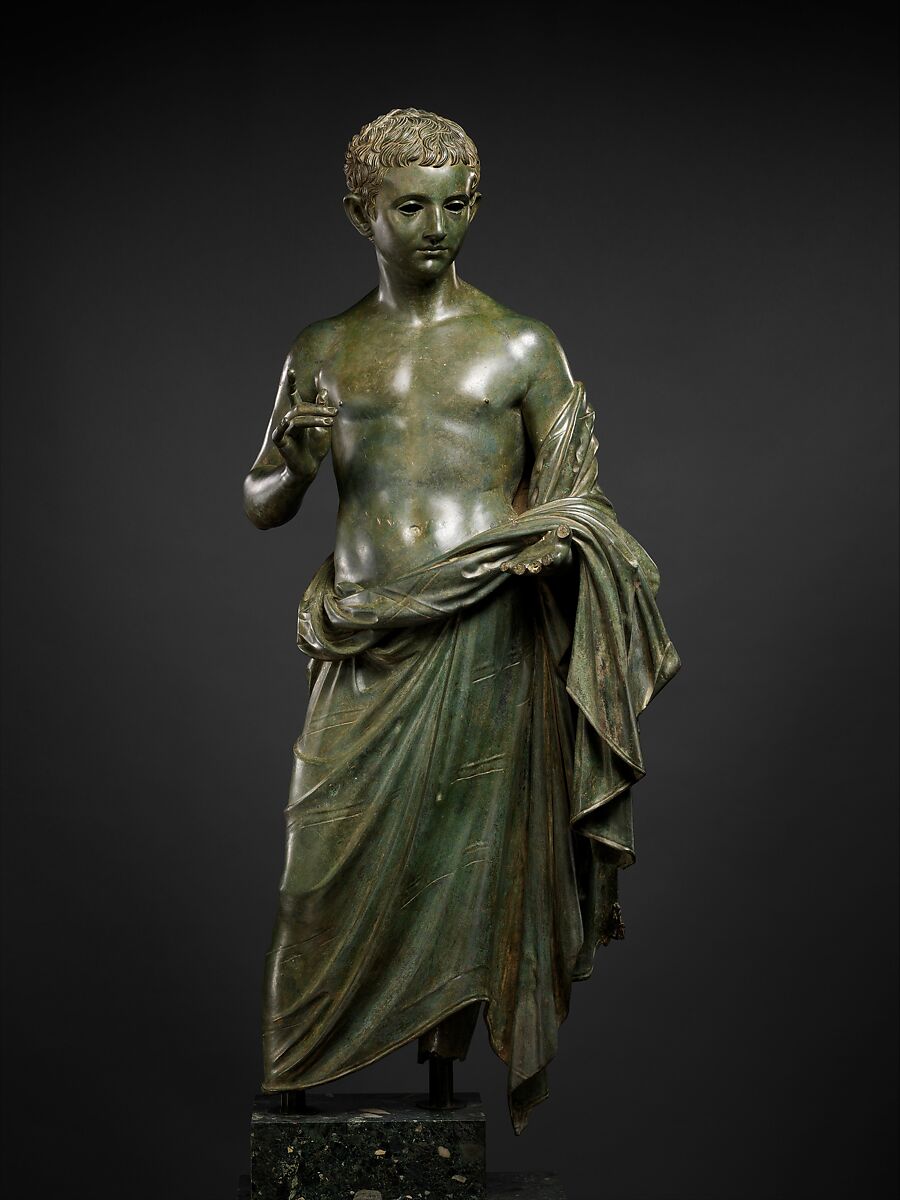
The himation needed no pins. A man usually draped it across his left shoulder and around his body, leaving the right arm free. A woman could free either arm. It went over a chiton or peplos, or was worn alone. Older boys could also be fully covered when not following adult male dress. Rules of taste mattered: cloth trailing past the ankles looked vulgar, and a bare left shoulder on a man was thought barbaric.


When Himation is worn
The himation was extremely popular in ancient Greece, worn in daily life by all ages and classes. Men used it in professional settings, such as a judge shown on a terracotta amphora. Women wore it in public for warmth over thin Ionic chitons. It also carried social meaning: a carefully arranged wrap marked elite standing, while a careless one could invite judgement or display. Gods such as Athena and Dionysos are described wearing it.
Styles of Himation
Styles varied by wearer and setting. Men's and women's drapes differed in which arm stayed free, and women had more freedom in arrangement. The himation could serve as a cloak, a shawl, a sole garment, or a veil. The Romans took up the style. In Byzantine art it became iconographic dress, while lower classes continued to wear it. Historians use the word for several Greek garments because of its popularity.
What Himation means
The himation was more than cover. Its arrangement spoke: a tidy drape suggested elite status, and a sloppy one could shape how others judged a person. Ancient philosophers noted this social reading. The garment appears on gods and on everyday people in vase paintings and sculpture. It passed into Byzantine religious imagery, where Christ, the Virgin Mary and biblical figures are shown in it. No Geographical Indication or official heritage status is given in the sources.
Questions people ask about Himation
Where does the himation come from?
It comes from ancient Greece, where it was worn from the Archaic period through Hellenistic times, roughly 750 to 30 BC. Greek men and women wore it, and the Romans later adopted the style. It also continued into the Byzantine era as dress in art and among lower classes.
How was a himation made?
Women usually spun wool or linen into yarn and wove it into a large rectangle at home. Professional weavers and dyers also made some. Fine linen was costly and reserved for wealthier people. Decoration could be woven in, embroidered, or painted onto the cloth.
How is it worn?
It is draped without pins. Men generally wrapped it over the left shoulder and around the body, leaving the right arm free. Women could free either arm. It went over a chiton or peplos, or was worn alone as both tunic and cloak.
What did it look like?
Sources describe a rectangular wrap, usually white, of wool or linen. Some examples had complex patterns or embroidery in strong colours, or were painted. The sources name no specific motifs. The drape could be arranged neatly or loosely, and that arrangement carried social meaning.
Was it worn by anyone special?
Yes. All ages and classes wore it, and men sometimes used it in professional settings. Gods such as Athena and Dionysos are shown in it. In Byzantine art, Christ, the Virgin Mary and biblical figures wear it as iconographic dress.
Good reading and sources
- Himation on WikipediaEncyclopedia
- More photos on Wikimedia CommonsPhotos and video
- Wikidata recordOpen data
The facts on this page come from the Wikipedia article "Himation", written by its contributors and used under the CC BY-SA 4.0 licence, and from its Wikidata record (CC0). EveryPallu rewrote the text in its own words, with AI assistance, and compares every page with the article to make sure no passage is copied. It may be reused under the same CC BY-SA 4.0 licence with a link back.
It may contain mistakes. Traditions, weaves and prices differ from one weaver, town or shop to the next, and it is not buying advice. If something is wrong, tell us. Last refreshed 2026-11-04.

Its cousins elsewhere
All wool and pashmina 🇮🇳 India and 1 moreTant sari
A light, see-through cotton saree from Bengal with a heavy borderCotton · Jamdani · Embroidery
 🇮🇳 India and 1 moreSariसाड़ी
An unstitched cloth draped over the body, worn across the Indian subcontinentCotton · Brocade · Ikat
🇮🇳 IndiaPhool Patti ka Kaam
An appliqué and embroidery craft of Uttar Pradesh, once used for women's sarisCotton · Appliqué · Embroidery
 🇮🇳 IndiaKachchh shawl
A dense wool wrap from Kutch, woven in two panels and joined with a fish stitchWool · Tie-dye · Embroidery